Old Spice Changed Who Mens Body Wash Was Talking To.


THE POSITION
Old Spice changed who men's body wash was talking to.
The product was for men. The purchase decision wasn't always theirs alone. Old Spice built its breakthrough campaign around that distinction, addressing women directly while presenting men with an exaggerated version of desirability. The humor made it memorable. The more consequential choice was underneath it: instead of persuading one buyer, Old Spice made body wash part of a conversation between two people.
01 — THE MOVE
Speak to her about him.
Men's grooming advertising had an obvious audience: men. Old Spice chose a different route. Wieden+Kennedy's research found women accounted for 60% of body-wash purchases, so the campaign addressed them without abandoning the men who would actually use the product.
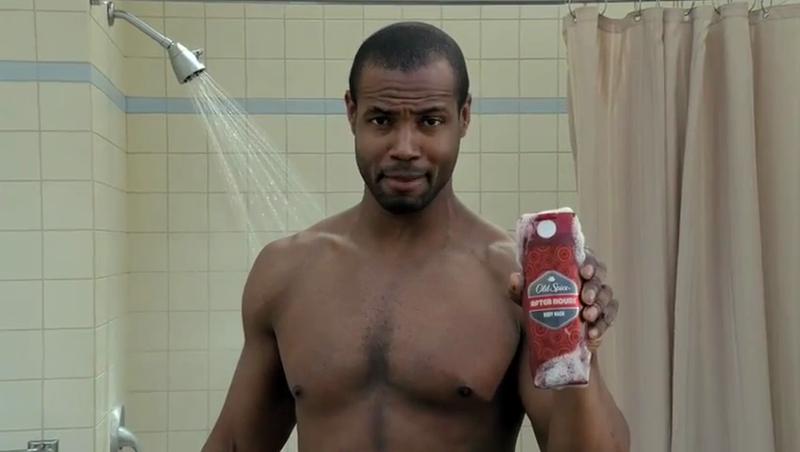
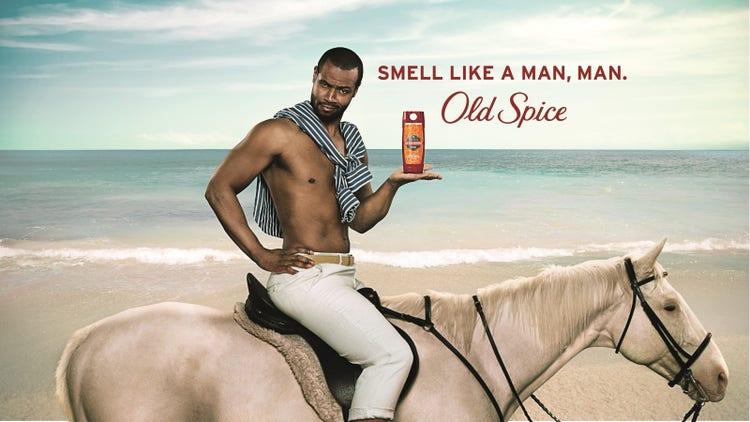
Isaiah Mustafa became the bridge. He looks at women and asks them to compare their man with an impossible ideal, then makes Old Spice the attainable piece of that fantasy. The product remains masculine. The persuasion moves outside the user.
That distinction matters. Old Spice wasn't simply changing demographic targeting. It was recognizing that the person consuming a product and the person influencing its choice can be different.

02 — THE THINKING
Desire could do what product superiority couldn't.
Old Spice was operating in an increasingly competitive body-wash category. Wieden+Kennedy could have fought another functional battle over scent, cleaning or product performance. Instead, it attached the product to something more human: attraction.
That created a two-sided proposition. For women, Mustafa represented an absurd fantasy of what their man could smell like. For men, he represented a masculine identity that was intentionally impossible but still inviting. Old Spice sat between them.
The emotion wasn't simply attraction. It was possibility. A mundane shower product became a small, accessible way of moving toward a more desirable version of a man.
The media logic reinforced the strategy. W+K says placements deliberately targeted environments where couples would be watching together. The audience insight therefore shaped not only the message, but where the conversation occurred.
03 — THE IMPACT
A commercial became a character the brand could keep using.
The strategic choice didn't end with one sixty-second film. Old Spice had created a character capable of carrying the same relationship into culture.
Months later, Wieden+Kennedy turned audience questions from Twitter, Facebook, Reddit and elsewhere into 186 personalized video responses produced in roughly two and a half days. The spokesman stopped merely talking at the audience and began answering it.
Business evidence followed. Adweek reported Nielsen data showing Old Spice Body Wash sales up 55% over three months and 107% in the most recent month measured; W+K later reported that Red Zone Body Wash sales had doubled year over year by July.
Old Spice had found something more durable than a joke: a relationship the brand could continue.

Sources
Wieden+Kennedy — “Old Spice: Smell Like A Man, Man”
Primary agency account establishing the 60% female-purchaser insight, couple-oriented strategy, launch, media logic, Response campaign and reported business results.
View Source — Wieden+Kennedy
Old Spice — “The Man Your Man Could Smell Like”
Original February 4, 2010 campaign film published by Old Spice's verified YouTube channel; primary evidence of the creative execution.
View Source — Old Spice YouTube
Wieden+Kennedy — “The Scent of Success”
Agency history documenting the longer P&G/W+K partnership and that several years of experimentation preceded the breakthrough campaign.
View Source — Wieden+Kennedy
Adweek — “Old Spice Campaign Smells Like a Sales Success, Too”
Independent contemporaneous reporting citing Nielsen and SymphonyIRI data, including a 55% three-month sales increase and 107% one-month increase for Old Spice Body Wash.
View Source — Adweek
Adweek — “The 26 Best Super Bowl Ads of the Past 26 Years”
Retrospective industry evidence documenting the campaign's enduring recognition, awards and cultural prominence.
View Source — Adweek

Written by
Ray Joseph
Founder, JOSEPH
















.png)
