Caterpillar Made Precision Impossible to Ignore.


THE POSITION
Make precision impossible to ignore.
Heavy equipment is usually sold through the language of power, productivity and reliability. Caterpillar chose to make another capability visible: control.
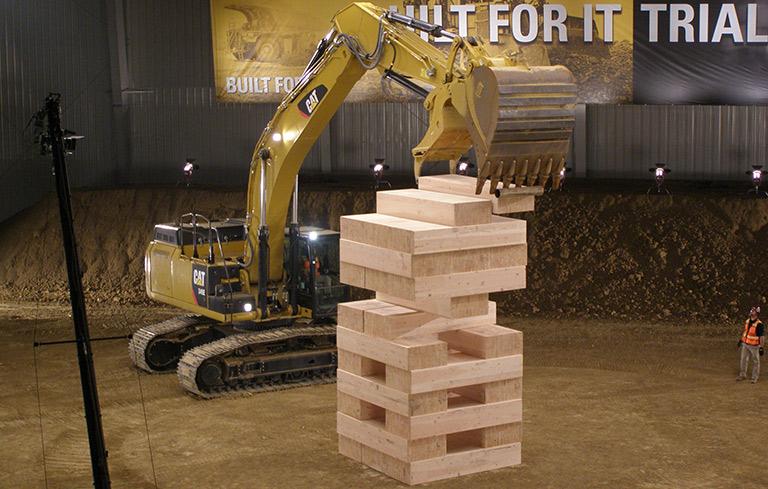
In Stack, five operators maneuver massive wooden blocks in a giant game of Jenga. What looks like entertainment is a carefully constructed product demonstration. By placing powerful machines in a situation where the smallest movement matters, Caterpillar turns an engineering advantage into something audiences can recognize without technical explanation.
01 — THE MOVE
Turn product demonstration into entertainment.
Caterpillar could have demonstrated its equipment lifting concrete, moving earth or completing construction tasks. Instead, it chose a game familiar to millions.
Five operators used five CAT machines to remove and reposition wooden Jenga blocks weighing more than 600 pounds each. The tower weighed over eight tons.
The strategic choice was to make precision the source of suspense. Every movement created a question: Could a machine built for enormous loads handle something so delicate?
That tension gave viewers a reason to keep watching while the equipment demonstrated its capabilities.
Caterpillar didn't replace the product demonstration with entertainment. It made the product demonstration entertaining.
02 — THE THINKING
Make the audience feel the difficulty.
The appeal of Stack comes from the contrast between the size of the machines and the delicacy of the task.
Construction equipment is associated with force. Jenga rewards restraint. Putting the two together creates an unexpected test of control that viewers can judge for themselves.
That matters because the audience doesn't need to understand hydraulic systems or machine specifications to appreciate the difficulty. They understand what happens when a Jenga block moves too far.
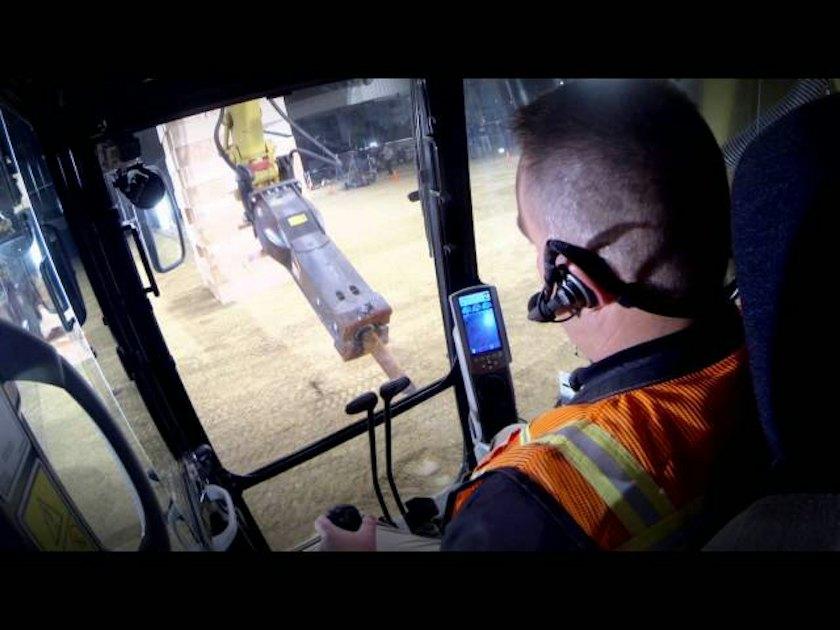
The operators are essential to the demonstration. Their combined 121 years of experience makes clear that machine capability and human skill work together. The film gives both a role in the outcome.
For potential customers, the relevant quality is precision under demanding conditions. For everyone else, the appeal is suspense.
Caterpillar found a way to communicate both without separating the industrial audience from the wider public.
03 — THE IMPACT
A demonstration becomes a brand platform.
The significance of Stack extends beyond a memorable video.
Caterpillar established a repeatable way to show equipment capability through unusual challenges. Subsequent Built For It Trials tested machines in settings ranging from a china shop to a sandcastle project, giving different products opportunities to demonstrate their strengths.
The original film also attracted attention beyond industrial trade audiences. Adweek reported 1.1 million YouTube views shortly after its release, although that attention alone cannot establish sales impact.
The strategic advantage is a more accessible form of proof. Technical performance becomes something people can see, understand and remember.
Caterpillar made the capability the story, and the story became the demonstration.

SOURCES
Caterpillar — Built For It Trials: Stack
Official campaign documentation detailing how Caterpillar used five machines and experienced operators to demonstrate precision through a giant game of Jenga.
Caterpillar — The Making of Stack
Behind-the-scenes documentation examining the engineering, operator skill, and technical challenges involved in executing the campaign.
Adweek — Construction Machines Play Jenga With 600-Pound Blocks
Independent advertising coverage examining Caterpillar's unconventional demonstration of heavy-equipment capability.
Cygnus Business Media — Caterpillar Premieres Image Shift
Contemporaneous reporting documenting the campaign's launch and its broader brand communication objectives.
Ads of the World — Largest Jenga Game Played With CAT Excavators
Creative-industry campaign archive documenting the execution and associated agency attribution.

Written by
Ray Joseph
Founder, JOSEPH




















.png)
