

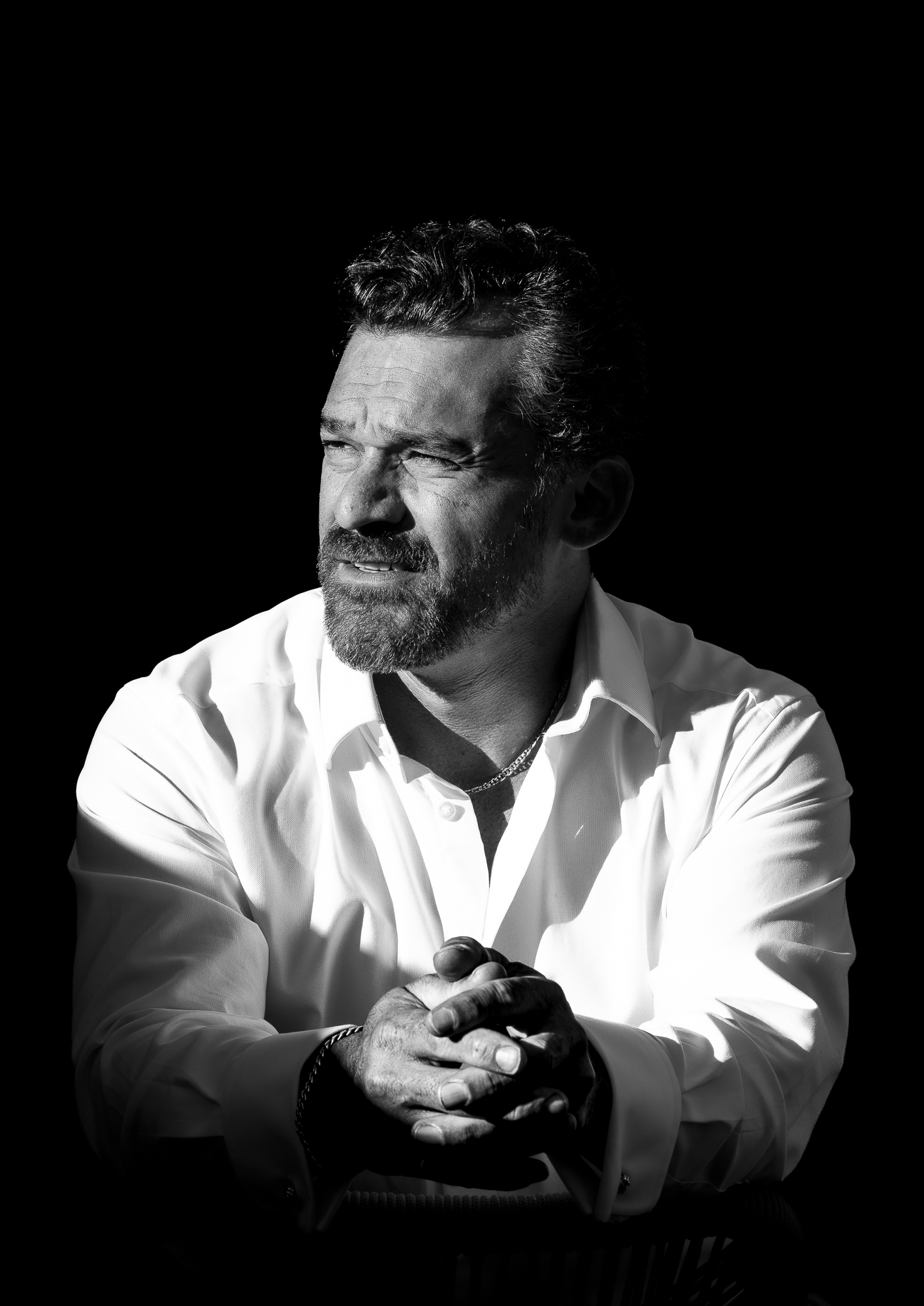
Ray Joseph Ramos is the Founder and Principal of JOSEPH, a strategy consulting firm built on a conviction shaped by more than fifteen years of work across marketing, brand development, creative execution, media, digital infrastructure, customer journeys, and commercial growth: the quality of execution is ultimately constrained by the quality of the strategy that precedes it. His educational background is in psychology, with a particular interest in consumer behavior, decision-making, and the forces that shape preference. That interest became the intellectual thread running through his career. Long before JOSEPH was formed, Ray was focused on a deceptively simple question: what makes people choose? Why does one brand create preference while another is ignored? Why does one message create movement while another disappears into the market? Why do consumers trust certain companies, remember certain ideas, respond to certain offers, and return to certain experiences? Those questions moved with him from the study of human behavior into the commercial world, where they could be observed not only in theory, but in real markets, real campaigns, and real business outcomes.
For more than a decade and a half, Ray worked inside the execution side of marketing, eventually building and leading a boutique full-service creative and marketing agency. His experience spanned the full operating system of modern marketing: strategy, positioning, brand development, creative direction, websites and digital infrastructure, customer journey design, campaign development, paid media, advertising, funnel architecture, performance management, and ongoing optimization. That breadth gave him an unusually complete view of how marketing decisions move from leadership intent to customer response. He saw campaigns before they launched, while they were in market, and after the numbers were in. He saw strong creative underperform because the underlying proposition was weak. He saw sophisticated targeting fail because the audience had been poorly defined. He saw teams spend more in an attempt to solve problems that media could never solve. He saw simple ideas outperform more elaborate ones because the strategic foundation was clearer. He also saw campaigns generate exceptional returns when the market, customer, message, offer, and positioning were aligned before execution began.
Over time, that experience revealed a pattern that became increasingly difficult to ignore. The strongest-performing work was rarely distinguished by one executional variable. It was not simply the media platform, the creative format, the targeting sophistication, the technology stack, or the amount of spend. The campaigns that consistently performed at the highest level tended to share something more fundamental: the strategy was better. The business understood who mattered, what problem it was solving, why the customer should care, what made the offer relevant, where the brand belonged, and what the customer needed to believe in order to choose. When those choices were clear, execution became more powerful. Creative had direction. Media had purpose. Messaging became sharper. Customer journeys became easier to design. Teams aligned more quickly. Resources became easier to allocate. Performance became easier to interpret. When those choices were weak, execution often became a series of compensations—more content, more ads, more platforms, more testing, more tools, more revisions, more complexity—without a corresponding increase in effectiveness.
That realization changed the direction of Ray’s career. He came to understand that strategy was not simply one phase of marketing; it was the decision layer that shaped nearly every phase that followed. Execution answers how something will be done. Strategy determines what should be done, for whom, in what market, under what conditions, and why the customer should care. Those questions are harder, more consequential, and far more expensive to get wrong. Ray began to see that many organizations were reversing the natural order of the work. They were building before deciding, advertising before positioning, creating before clarifying, and optimizing before determining whether the underlying direction was right. The result was often greater activity without greater certainty. By contrast, the strongest work consistently demonstrated the opposite principle: clarity creates leverage. A clear strategic choice can improve dozens of downstream decisions. One strong insight can reshape positioning. Positioning can reshape the message. The message can reshape the creative. The creative can change response. Response can change economics. The effect compounds.
This was the foundation from which JOSEPH emerged. Ray concluded that his greatest impact was not in managing every downstream executional discipline, but in working further upstream, where the highest-leverage decisions are made. His focus shifted increasingly toward the questions that precede campaigns and channels: how a company should understand its customer, where it should compete, how it should position itself, what makes it meaningfully different, which growth opportunities deserve investment, what should be prioritized, and what should deliberately be left behind. JOSEPH was formed around the belief that better marketing begins with better thinking, and that strategic clarity is often more valuable than additional activity. The firm exists to work at the point where leadership choices are made, before resources are committed, agencies begin building, creative teams begin producing, and media begins spending.
Ray’s background in psychology continues to shape the way he approaches that work. Markets can be measured, competitors can be mapped, categories can be analyzed, and financial models can be built, but the ultimate outcome still depends on human decisions. A customer notices or ignores. Trusts or hesitates. Remembers or forgets. Chooses or does not choose. Returns or leaves. For Ray, strategy becomes commercially meaningful only when it influences those decisions. A company may describe itself one way internally while the market perceives something entirely different. Leadership may believe a particular differentiator is important while customers barely register it. A product may possess dozens of features while only one or two materially influence preference. The role of strategy is to identify those distinctions and convert them into choices that the organization can act on.
That perspective also shaped one of the central principles behind JOSEPH: clarity over complexity. Ray’s experience taught him that sophisticated marketing does not necessarily require complicated strategy. In many cases, the opposite was true. The strongest strategic ideas were usually the easiest to understand, the easiest to repeat, and the easiest to use as a filter for future decisions. They reduced ambiguity. They gave leadership a basis for saying yes and no. They traveled across departments without losing meaning. They helped agencies understand what they were solving. They gave creative teams a direction rather than a collection of instructions. They helped organizations allocate resources with greater confidence. The purpose of strategy, in Ray’s view, is not to display complexity, but to absorb it. Research becomes insight. Insight becomes choice. Choice becomes direction. Direction becomes action.
His operating background remains an important part of that perspective. Ray spent years responsible for what happened after strategy, which gives him a practical understanding of what weak strategic thinking costs downstream. He knows what it is like when an agency receives an unclear brief, when positioning changes after creative has already been produced, when a campaign is optimized around the wrong proposition, or when teams are asked to solve a strategic problem with executional tools. He also knows what happens when the foundation is right: decisions become faster, creative becomes sharper, media becomes more efficient, and the organization becomes easier to align. That experience keeps his approach grounded. Strategy, in his view, is only valuable if it survives contact with execution. It should guide agencies, shape investment, inform creative, influence resource allocation, and help leadership make better decisions as conditions change. If it cannot do those things, it is not doing enough.
Today, Ray’s work sits at the intersection of customer behavior, competitive reality, positioning, growth, and executive decision-making. He is most interested in the questions that determine direction before organizations begin moving: where the business stands, where the opportunity actually exists, who matters most, what the customer values, what the organization can credibly own, what makes the brand meaningfully different, and which choices will create the greatest strategic leverage. His belief is not that strategy eliminates uncertainty. It is that good strategy helps leadership make better decisions inside uncertainty.
The conviction behind JOSEPH is therefore the product of experience rather than theory alone. After more than fifteen years across the full arc of marketing—from strategy and brand to infrastructure, creative, media, execution, performance, and optimization—Ray came to a simple conclusion: execution multiplies strategy; it does not replace it. Exceptional execution can amplify a strong strategic decision, distribute it, optimize it, and bring it to life with precision. But it cannot permanently compensate for a business that does not know who it is for, why it matters, where it should compete, or why customers should choose it. Those questions belong at the beginning.
That is where Ray believes the highest-value work happens.
That is where JOSEPH begins.


.png)
.png)


01 — What exactly does JOSEPH help companies do?


JOSEPH helps companies make better marketing decisions. We work with leadership to understand where the brand stands, identify what matters most, and develop the positioning, priorities, and strategic direction needed to move forward with greater clarity.
02 — Who does JOSEPH work with?
We work with companies and leadership teams facing important questions about their brand, market, customers, positioning, or growth. Our work can support established organizations, growing companies, and leadership teams navigating change, competition, or a new stage of growth.
03 — When should a company hire JOSEPH?
Usually when the answer is not simply “do more marketing.” A company may have capable people, agencies, technology, and resources but still lack clarity around what it should prioritize, how it should position itself, or where its greatest opportunity lies. That is where strategy becomes valuable.
04 — How is JOSEPH different from a marketing agency?
Marketing agencies are generally built to execute. JOSEPH is built to advise.
We work upstream of execution—helping leadership determine the positioning, priorities, choices, and strategic direction that should guide the marketing. Once that direction is established, internal teams and agency partners can execute against a clearer strategy.
05 — What types of problems does JOSEPH help solve?
We help leadership address questions involving positioning, differentiation, customers, competition, brand direction, growth priorities, go-to-market decisions, marketing effectiveness, and where resources should be focused.
The specific problem may differ, but the objective remains the same: reduce complexity and create strategic clarity.
06 — What does a typical consulting engagement look like?
Every engagement begins with understanding the situation before recommending a direction. We examine the business, market, customer, competition, existing marketing, internal assumptions, and the decisions leadership is facing.
From there, JOSEPH develops the strategic recommendations, priorities, and direction appropriate to the engagement. Depending on the need, our involvement may continue through ongoing advisory as decisions are made and the strategy moves forward.
The specific problem may differ, but the objective remains the same: reduce complexity and create strategic clarity.
07 — Does JOSEPH offer marketing execution?
No. JOSEPH intentionally does not sell marketing execution.
Our independence is important to the integrity of our advice. We do not make money from advertising spend, media placement, websites, creative production, technology platforms, or the partners we recommend. We have no financial incentive to recommend one tactic, vendor, channel, or solution over another.
That allows us to make recommendations based on what we believe is right for the client and the brand—not what creates additional revenue for JOSEPH.
From there, JOSEPH develops the strategic recommendations, priorities, and direction appropriate to the engagement. Depending on the need, our involvement may continue through ongoing advisory as decisions are made and the strategy moves forward.
The specific problem may differ, but the objective remains the same: reduce complexity and create strategic clarity.
Our incentive is the success and growth of the brands we advise.
08 — Does JOSEPH make money from its recommendations?
No. JOSEPH does not accept commissions, referral fees, media percentages, or other financial incentives tied to the recommendations we make.
If we recommend an agency, platform, partner, channel, or investment, the recommendation is made because we believe it serves the strategy and the client's interests.
09 — Can JOSEPH work with our existing agency or internal marketing team?
Yes. In many engagements, that is exactly how we work.
JOSEPH can provide the strategic direction while internal teams and specialist partners bring that direction to life. We are not there to unnecessarily replace capable partners. We help leadership establish clarity and help the people responsible for execution understand the strategy they are executing against.
10 — How long does an engagement typically last?
It depends on the problem being solved and the scope of the work. Some strategic engagements are defined projects with a clear beginning and conclusion. Others develop into longer advisory relationships as leadership continues making decisions and implementing the strategy.
We define the scope, responsibilities, timing, and expected outcomes before an engagement begins.
11 — Does JOSEPH offer ongoing advisory?
Yes. Advisory provides leadership with continued access to senior strategic counsel after—or independently of—a defined strategy engagement.
This can include evaluating opportunities, reviewing marketing decisions, challenging assumptions, advising on priorities, working with agency partners, and helping leadership maintain strategic alignment as conditions change.
12 — How much does it cost to work with JOSEPH?
Fees depend on the complexity of the problem, scope of the engagement, level of involvement required, and duration of the work.
After an initial conversation, JOSEPH recommends an appropriate engagement structure and provides a clear scope and fee before work begins.
13 — Does JOSEPH work with clients outside California?
Yes. JOSEPH can work with organizations and leadership teams regardless of location. Engagements can be conducted remotely, in person, or through a combination of both depending on the needs of the work.
14 — Does JOSEPH specialize in a particular industry?
Our work is centered on strategic marketing problems rather than a single industry. The underlying questions—how to compete, what customers value, where a brand should position itself, what to prioritize, and how to become the preferred choice—exist across categories.
When specialized industry expertise is necessary, we account for that as part of the engagement.
15 — How do we know if JOSEPH is the right fit?
The first conversation is designed to determine exactly that.
We want to understand the problem, what leadership is trying to accomplish, what has already been tried, and whether strategic consulting can meaningfully help. If JOSEPH is not the right answer, we would rather say so than create an engagement that should not exist.
16 — How do we get started?
Start with a conversation.
Tell us where the business stands, where you are trying to go, and what is making that difficult. We will determine whether JOSEPH can help and, if so, recommend the appropriate next step.
Proven Expertis
Our team of seasoned legal experts brings extensive knowledge and experience to navigate complex regulatory challenges effectively.
Proven Track Record
Our team of seasoned legal experts brings extensive knowledge and experience to navigate complex regulatory challenges effectively.
Tailored Approach
Our team of seasoned legal experts brings extensive knowledge and experience to navigate complex regulatory challenges effectively.
Integrity
Our team of seasoned legal experts brings extensive knowledge and experience to navigate complex regulatory challenges effectively.
Dedication to Excellence
Our team of seasoned legal experts brings extensive knowledge and experience to navigate complex regulatory challenges effectively.
Real Results
Our team of seasoned legal experts brings extensive knowledge and experience to navigate complex regulatory challenges effectively.